
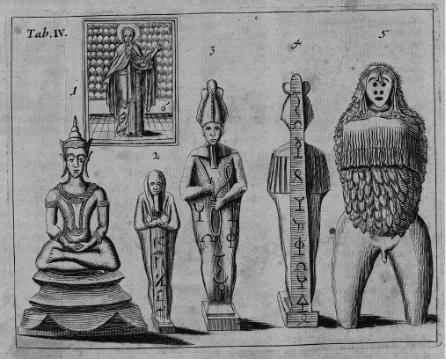
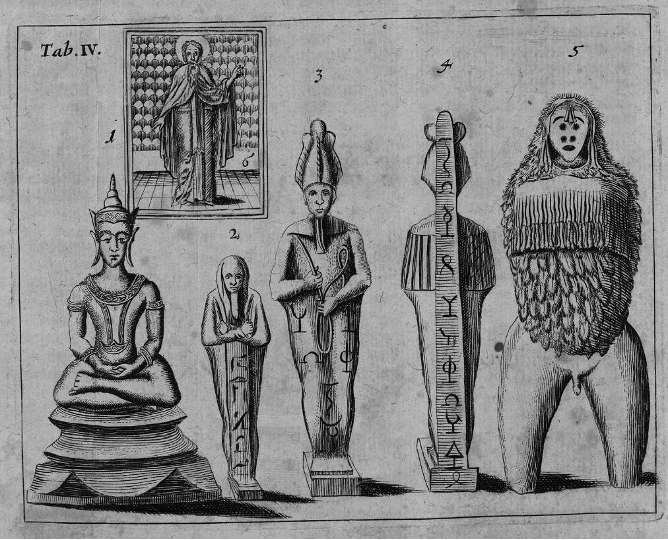
Adam Olearius, Gottorfische Kunstkammer, Schleswig, 1674, Zurich, Zentralbibliothek
Scientiae: online Turin-Prague seminar, fall 2024
Organizers
Stefano Gulizia (virtual host in Turin) and Vladimír Urbánek (virtual host in Prague)
Hours
16:30-17:30, with roughly 40 minutes for a paper presentation, followed by discussion
Calendar
SEPTEMBER 30
BARBARA BIENIAS
‘There is no new thing under the Sun’: Discussing New Astronomy in Early Modern English Almanacs
OCTOBER 7
SERGIO H. OROZCO-ECHEVERRI
Astrology, Almanacs, and the Global Shift: From Flat Charts to Spherical Maps in Early Modern Ibero-America
OCTOBER 14
THOMAS VOZAR
The Dragoman and the Scholar: Ali Ufki, Isaac Barrow, and the Orientalizing Poetics of De Religione Turcica (1658)
OCTOBER 21
EWA ZAKRZEWSKA
Desiderata, or Experimental Wish List: A Case Study in Information Architecture and Principles of Collaborative Inquiry in the Early Royal Society
OCTOBER 28
MICHAŁ CHOPTIANY
Reforming Calendar and World Chronology in Early Modern Poland-Lithuania: The Case of Joannes Latosinus
NOVEMBER 4
VERONIKA ČAPSKÁ
Multiperspectivity and the Conceptualisation of Gifts, (In)equality, Social Order and Generosity in the Works of Jan Amos Comenius (1592–1670)
NOVEMBER 11
STEFANO GULIZIA
World Chronologies from China to Scandinavia: Christoph Helwig’s Theatrum (1609) and Thomas Bangius’s Caelum Orientis (1657)
NOVEMBER 18
JOHANNA LUGGIN
Heavenly Travels, from Rome to Brazil: Baroque Imagination and Global Science in Valentin Stansel’s Uranophilus (1685)
NOVEMBER 25
GÁBOR PETNEHÁZI
The Dark Side of Catholic Enlightenment: Reinventing and Rationalizing Blood Libel at the Academia Taxiana (1741– 1755)
DECEMBER 2
ODED RABINOVITCH
Aristocratic Science and Book Publishing: The Case of Blaise-François, Comte de Pagan (1603–1665)
DECEMBER 9
JUSTYNA ROGIŃSKA
How Much Did a Woman Calendar-maker Earn? Christina Kirch (1697–1782) and Her Work for the Royal Prussian Academy of Sciences
DECEMBER 16
GÁBOR FÖRKÖLI
Commonplacing, Paroemiology, and Knowledge Management at the Lutheran Gymnasium of Strasbourg in the 1580s–90s
 Scientiae