President
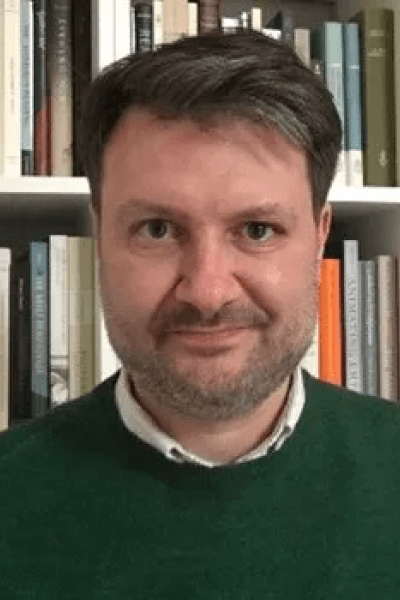
Stefano Gulizia
University of Milan
Stefano Gulizia is a historian of early modern science and philosophy, with a focus on forms of intellectual coordination. Trained as a classicist and philologist, he taught extensively in the U.S. (after his PhD from Indiana University) and held fellowships in California, Oxford, Chicago, Montréal, Berlin, Wolfenbüttel, Bucharest and Warsaw. He has now joined the faculties of History at the University of Milan, and he is a research fellow at the Center for Early Modern History. Recent publications consider Aristotelian natural philosophy, the relation of science and print culture, cosmology, and textual scholarship. In 2020 he edited a special issue on mechanical automata in early modern Europe. He is currently the editor in chief of the Scientiae Studies series at AUP.Links:
Center for Early Modern History, University of Minnesota; Academica.edu; Scientiae Studies, Amsterdam University Press

Secretary
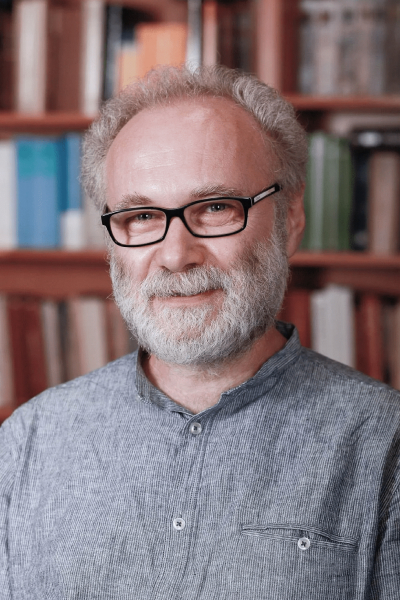
David Beck
University of Warwick
David Beck is based in the Department of History at the University of Warwick, where he completed his PhD in 2013. He is currently a fixed-term Lecturer in History, and Academic Technologist for Research in the Faculty of Arts. He has published on physico-theology and natural history in late seventeenth-century England. His current research focuses on two disparate areas of English intellectual culture around the turn of the eighteenth century: local natural history, and the relationship between erotica/pornography and the early Enlightenment. David Beck was responsible for organizing the second Scientiae conference in Warwick in 2013.
Member
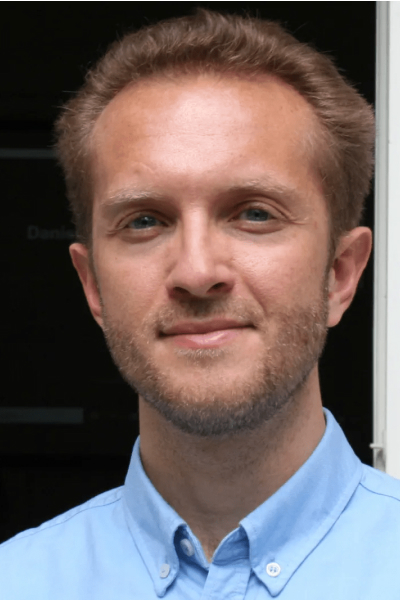
Vladimír Urbánek
Czech Academy of Sciences
Vladimír Urbánek is a senior researcher at the Department of Comenius Studies and Early Modern Intellectual History, Institute of Philosophy, Czech Academy of Sciences in Prague, where he served between 2012 and 2021 as a head of the department. He taught at the Charles University in Prague (2000–2011) and Tokyo University of Foreign Studies (2007). His research interests focus on early modern millenarianism, scholarly communication and correspondence networks, Protestant intellectuals exiled from the Czech lands after 1620 and life and work of Jan Amos Comenius. He is an editor-in-chief of the Acta Comeniana: International Review of Comenius Studies and Early Modern Intellectual History published in Prague. Among other publications, he authored a monograph Eschatologie, vědění a politika: Příspěvek k dějinám myšlení pobělohorského exilu [Eschatology, Knowledge and Politics: On the Intellectual History of the Post-White-Mountain Bohemian Exiles] (České Budějovice, 2008), and edited and co-authored annotations of three volumes of the critical edition J. A. Comenii Opera Omnia (2013, 2018, 2023). He has co-operated with the Oxford-based project ‘Cultures of Knowledge’ as the coordinator of Comenius database within the Early Modern Letters Online and together with Howard Hotson as a co-organizer of the international workshop and conference series in Prague, Cracow, Budapest and Oxford. He has been a coordinator of the Czech participation in the COST Action Project ‘Reassembling the Republic of Letters, 1500–1800’ (2014–2018). He has been a co-investigator and leader of the team of the Institute of Philosophy participating in a grant project: ‘Between Renaissance and Baroque: Philosophy and Knowledge in the Czech Lands within the Wider European Context’ financed by the Czech Science Foundation (2014–2018). Currently he is a PI of the project ‘Network of Letters (NETLET) — The correspondence of intellectual elites in turbulent times of Bohemian/Czech history from the digital perspective’ (2023–27). He was co-organizer of the Scientiae 2023 conference in Prague. Among his latest publications is the article ‘Historia Persecutionum Ecclesiae Bohemicae between History, Identity and Martyrology,’ in Archiv für Reformationsgeschichte vol. 114 (2023).
Member
Matthijs Jonker
Utrecht University
Matthijs Jonker is an Assistant Professor at the History and Art History Department of Utrecht University. Trained as a philosopher and cultural historian, in his current project he focuses on the transatlantic and transcultural production of knowledge in the early modern period, with particular attention for the images that were produced and circulated in this context. His recent publications include The Academization of Art: A Practice Approach to the Early Histories of the Accademia del Disegno and the Accademia di San Luca (Quasar, 2022)(which was based on his dissertation with the same title, University of Amsterdam, 2017), “Producing Knowledge in Early Modern Rome: Concepts and Practices of Disegno in the Accademia di San Luca and the Accademia dei Lincei” (Journal for the History of Knowledge, 2021), and “The Accademia dei Lincei’s network and practices in the publication of the Tesoro messicano” (Incontri, 2019).
Member
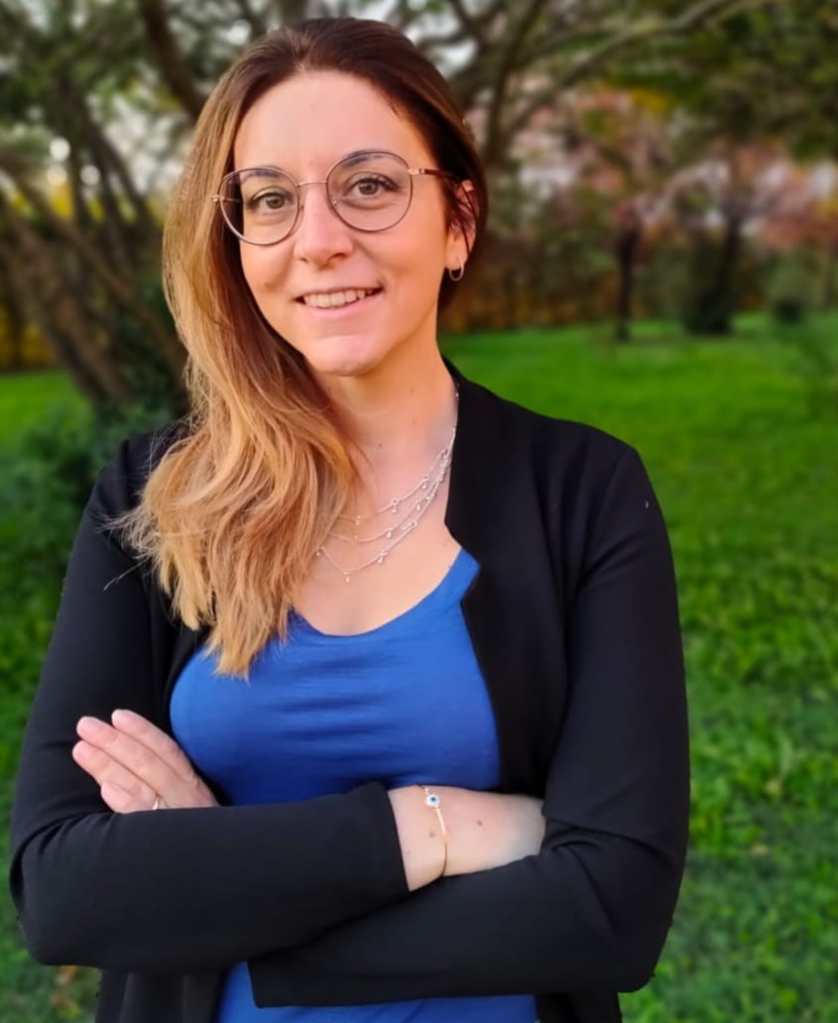
Eleonora Sammarchi
University of Bern
Eleonora Sammarchi is SNF-Assistant Professor at the University of Bern. She is the P.I. of the SNSF-Starting Grant Project “Medieval and Early Modern Mediterranean Mathematics” (MediMath). She is a historian of science with expertise in the history of mathematics and in Mediterranean studies. In 2022, she published with Classiques Garnier the edition, translation and historical commentary of al-Zanjānī’s treatise Balance of the equation in the science of algebra and al-muqābala. She is editor of the volume “History of Mathematics : Antiquity and Middle Ages” of the Encyclopedia of the History of Science (ISTE-Wiley). Her research interests are intellectual history, global approaches applied to the history of mathematics, and history of algebra in medieval and early modern times. Eleonora is also research associate at Laboratoire SPHere (University Paris Cité) and member of the editorial board of Arabic Sciences and Philosophy (Cambridge University Press).

Member
Sergio Orozco-Echeverri
Universidad de Antioquia
Profesor titular de historia y filosofía de la ciencia (Professor of history and philosophy of science) in the Instituto de Filosofía, Universidad de Antioquia (Colombia), Fellow of the Royal Historical Society (UK), eingeladener Professor at the Institut für Politikwissenschaft und Ideengeschichte at Justus-Liebig-Universität Giessen (Germany). Research Fellow of the Science Studies Unit, University of Edinburgh (2019-2022), Paul Oskar Kristeller Fellow of the Renaissance Society of America (2022-2023), Lisa Jardine grant holder of the Royal Society of London (2023), Frances A Yates Fellow, Warburg Institute (2024) and Berenson Fellow at I Tatti – Harvard University (2025-2026). With a background in philosophy and physics and a PhD in Science and Technology Studies (University of Edinburgh, UK, 2019). Currently PI of the research project “The Cosmology of Iberian-American repertorios de los tiempos”. The project traces and explains the production, circulation, and uses of knowledge of the heavens in early modern Iberian-America, encompassing historical analysis, philosophy, and digital humanities (http://ratiotemporis.com). My research focuses on the relationship between nature, scientific knowledge and society, particularly how these converge in the emergence and transformation of disciplines in the Renaissance and the early modern period. I have published on the production and uses of natural knowledge in Early Modern Europe and the Americas in Annals of Science, History of Science, Galilaeana, Early Science and Medicine and other major journals. I am under contract writing the book The New World and the reinvention of experience: Production and circulation of knowledge in colonial Spanish-America for Carocci Editore (Rome, 2025).
Past Members of the Committee
University of Prince Edward Island
University of Groningen
Univseridad Católica Andrés Bello
Simon Fraser University
University of Padova
Anglia Ruskin University
University of Queensland
University of Minnesota, Duluth
Vrije Universiteit, Brussels
University of Cambridge
Queen’s University, Belfast
University of Maryland